15
10 2025
Points to Consider When Selecting a Pressure Sensor
Pressure sensors used in industry are the heart of production lines. Choosing the right sensor is crucial, especially in extrusion systems exposed to high temperatures and pressures. An incorrectly selected sensor can lead to inaccurate measurements, unexpected downtime, and significant costs.
Why Are Pressure Sensors Important?
Pressure is one of the most critical parameters controlling melt flow in a production line. Melt pressure sensors measure the behavior of the polymer at the die entrance and provide instant data to control systems. This allows:
Product dimensions to remain constant.
Die blockages to be prevented.
Pump and extruder overloads are protected.
Waste rates to be minimized.
Criteria to Consider When Selecting a Sensor
Operating Temperature
Melt pressure sensors used in the plastics and rubber industries must generally withstand temperatures of 300°C to 400°C.
Pressure Range
They should be selected to suit the maximum pressure on the production line. For example, a sensor designed for 50 bar will fail quickly in 400 bar lines.
Material Strength
Models with Inconel or stainless steel diaphragms should be preferred for corrosion resistance.
Output Signal
Analog (mV, V) or digital (4–20 mA) signals must be compatible with the control system.
Mounting Type
The cable, connector, and diaphragm tip must be suitable for the line conditions.
Long-Lasting Solution with Melt Pressure Sensors
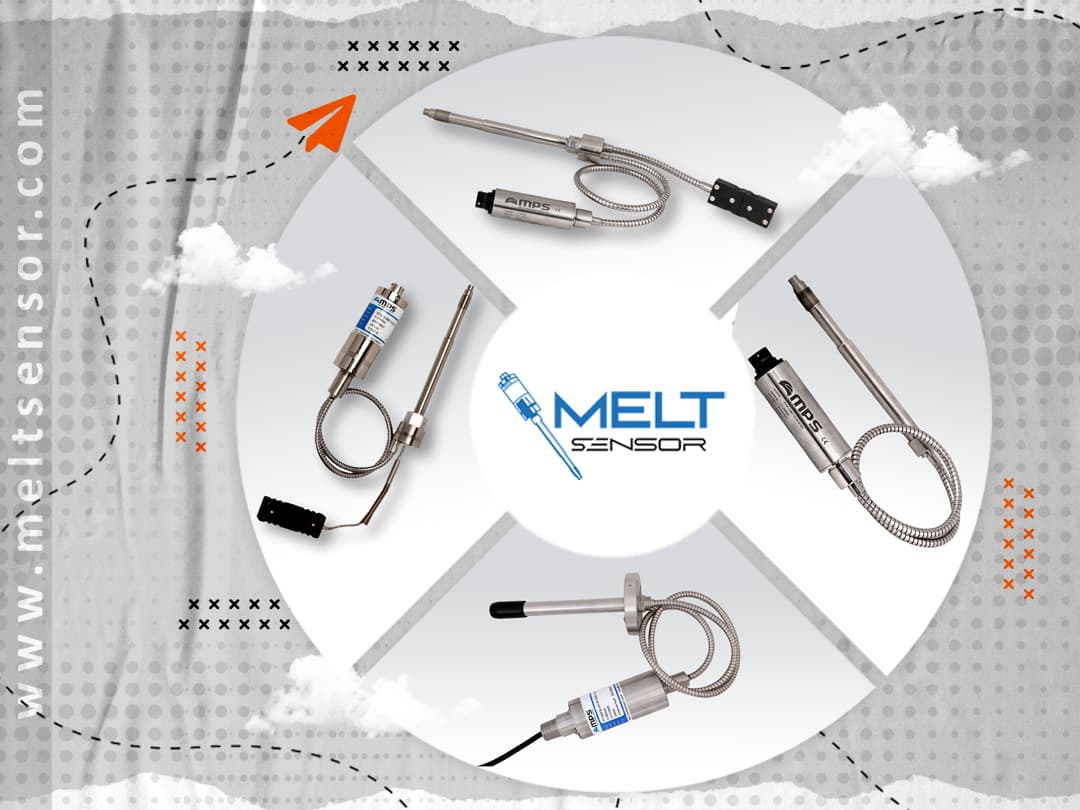
Choosing the right sensor not only increases measurement accuracy but also reduces maintenance times. MeltSensor's pressure sensor solutions are preferred in the industry for their long-lasting and reliable construction.
Careful sensor selection ensures the continuity of the production line. MeltSensor's expertise in melt pressure sensors and pressure sensor types is offered to suit every application.